We may earn a commission from links on this page. It never affects the Sqwod Score or the ranking.
The picks
#1 Value dual-band GPS watch
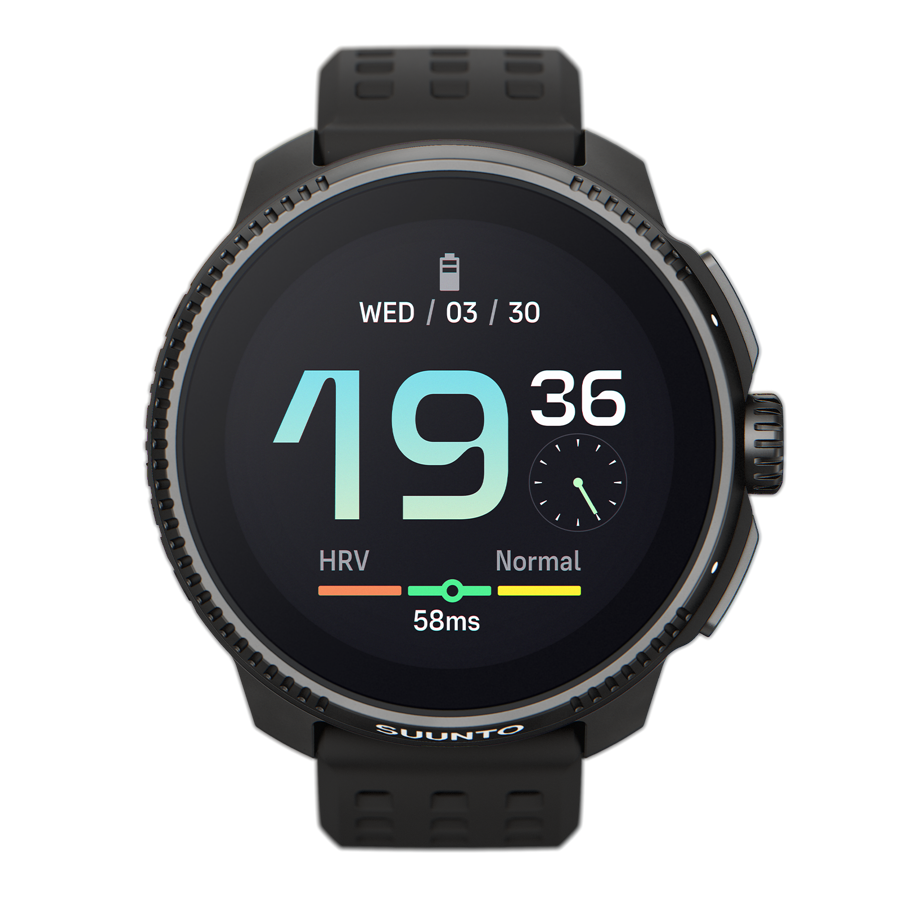
Suunto Race
87/100 Crowd 87 Assessment 86 Value 88 €319.16
Dual-band GPS, AMOLED and offline maps with ~26-day battery — Garmin features for far less.
- GPS accuracy9
- Battery9
- Display9
- Training features7
- Value9
Pros
- Bright, sharp 1.43" AMOLED (1000 nits) that's excellent in sunlight
- Accurate dual-band GPS on land, matching Garmin/Apple
- Outstanding battery life for AMOLED (up to ~40h dual-band, 12 days smartwatch)
Cons
- Suunto app and OS lag behind Garmin's ecosystem and third-party support
- Optical wrist heart rate is inconsistent during intervals
Buy it if Buy it if you want a big, bright AMOLED multisport watch with strong dual-band GPS, maps and multi-day battery for far less than a Garmin Forerunner 965. Skip it if Skip it if you rely on precise wrist heart rate, contactless payments, or Garmin's deep app and third-party ecosystem - or if you'd rather wait for the Race 2.
#2 Sleep & recovery
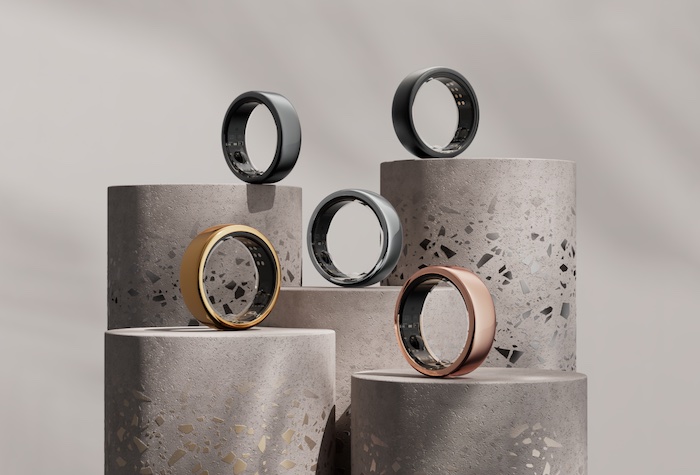
Oura Ring Gen3
86/100 Crowd 91 Assessment 84 Value 78 €299 Subscription: €70/yr
The most wearable recovery tracker — sleep and readiness without a screen on your wrist.
- Accuracy9
- Value7.2
- Build9.1
- Experience8.8
- Coach fit8.5
- Support8
Pros
- Best-in-class sleep & readiness accuracy
- Discreet — clients won't clock it mid-session
- 7-day battery, painless daily wear
Cons
- Mandatory €70/yr subscription
- No real-time workout heart rate
Buy it if You're a coach who programs around recovery and sleep, or you want the calmest readiness data to guide client load. Skip it if You need live training heart-rate and GPS — pair a chest strap or pick a sports watch. Or you won't pay a subscription.
#3 Runners, best value

Garmin Forerunner 165
86/100 Crowd 85 Assessment 84 Value 94 €175
Garmin's full training metrics at an entry price — the value pick for endurance.
- Accuracy8.8
- Value8.8
- Build8
- Experience8.4
- Coach fit7.8
- Battery8.2
Pros
- Garmin's full training metrics at an entry price
- Bright AMOLED + ~11-day battery
- Accurate GPS + heart rate for the money
Cons
- No offline maps or multiband GPS
- Polymer build, not titanium
Buy it if You coach runners or endurance clients and want Garmin's training data without the €500 tier. Skip it if You need offline maps, multiband GPS, or a premium metal build.
#4 Current-gen recovery ring

Oura Ring 5
86/100 Crowd 90 Assessment 85 Value 76 €393.90 Subscription: €69.99/yr
The newest, smallest Oura — the recovery benchmark, now current-gen.
- Accuracy9
- Value7
- Build9.4
- Experience9
- Coach fit8.5
- Support8
Pros
- World's smallest, jewellery-like comfort — barely there
- Sharper multi-wavelength sensors; up to ~9-day battery
- Best companion app in the category (App Store 4.9★)
Cons
- Mandatory €5.99/mo membership to unlock full features
- €50 pricier than Ring 4 — high total cost of ownership
Buy it if You program around recovery and sleep and want the most accurate, most discreet wearable there is — now so small clients won't clock it. Skip it if You need live workout heart rate and GPS, or you won't pay an ongoing subscription.
#5 Previous Series, often discounted

Apple Watch Series 11
86/100 Crowd 88 Assessment 84 Value 83 €380.99 Subscription: none
24h battery, hypertension alerts, 5G. Series 12 is now out; we have not scored it yet.
- Accuracy8.5
- Value7.4
- Build9.2
- Experience9.3
- Coach fit7.4
- Support8.8
Pros
- Up to 24h battery — finally a full day-plus of use
- Hypertension notifications + Sleep Score (watchOS 26)
- Brighter, more scratch-resistant display; 5G
Cons
- Iterative — little new vs Series 10
- Most software perks reach older watches via watchOS 26
Buy it if You're upgrading from a Series 6 or older and want the best all-round Apple Watch — real battery life, brighter screen, and the new health alerts, with no subscription. Skip it if You already own a Series 9 or 10 — watchOS 26 gives you most of the software wins for free, so the upgrade case is thin.
#6 Premium running/tri
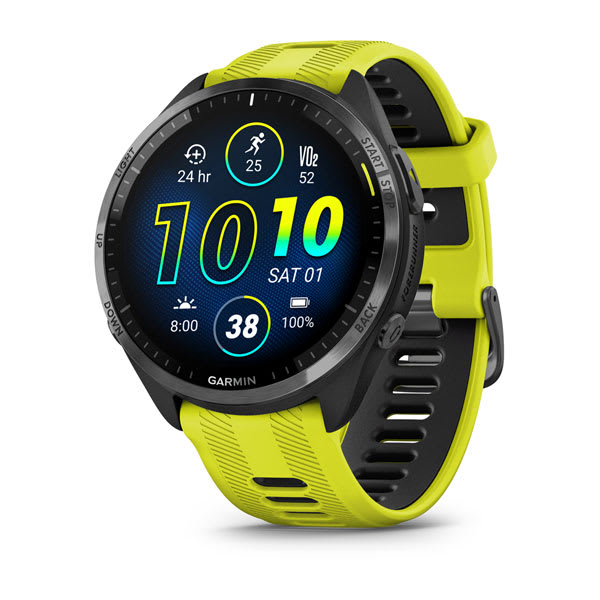
Garmin Forerunner 965
86/100 Crowd 88 Assessment 87 Value 74 €489
Garmin's near-flagship AMOLED runner — full maps and the complete training suite.
- GPS accuracy9.2
- Battery8.8
- Training suite9.4
- Display9.2
- Value6.8
Pros
- Bright 1.4" AMOLED in a light 53 g case — an expert-praised standout
- Long battery for AMOLED: up to 23 days smartwatch / ~31 h GPS
- Complete endurance toolkit: Training Readiness, Load, HRV Status, routable maps
Cons
- Premium price (~€499 street, higher MSRP)
- Large 47 mm case suits bigger wrists
Buy it if You coach or run endurance/triathlon and want race-grade GPS, full maps and the complete readiness/load suite in a light premium AMOLED watch. Skip it if You have a small wrist or tight budget and mainly want basic run tracking — a Forerunner 265 or 165 delivers most metrics for less.
#7 Everyday smartwatch

Apple Watch Series 9
85/100 Crowd 88 Assessment 84 Value 80 €419 Subscription: none
The best all-round smartwatch if your clients live in the Apple ecosystem.
- Accuracy8.5
- Value7.6
- Build9
- Experience9.3
- Coach fit7.4
- Support8.8
Pros
- Does everything well — workouts, ECG, notifications
- No subscription
- Huge app ecosystem
Cons
- ~1-day battery
- Recovery data less deep than Oura/Whoop
Buy it if You want one device for training, daily life, and health basics. Skip it if You want multi-day battery or specialist recovery depth.
#8 Runners, best value

Garmin Forerunner 170
85/100 Crowd 85 Assessment 84 Value 86 €250.56
Training Readiness, running power and Garmin Pay now at the entry price.
- Accuracy8.8
- Value8.4
- Build8
- Experience8.6
- Coach fit8.4
- Battery8
Pros
- Training Readiness, Training Status, running power and dynamics at the entry price
- Garmin Pay plus barometric altimeter, compass and gyroscope
- Accurate HR on steady runs and rides in the5krunner's tests
Cons
- Single-band GPS, last-gen Elevate Gen 4 sensor, no maps
- Battery slightly behind the 165 (up to 10 days); no triathlon mode
Buy it if You coach runners or endurance clients and want Garmin's readiness and load metrics on a first 'real' training watch, without the €500 tier. Skip it if You own a 165 and don't need the new metrics, or you need multiband GPS, maps or a multisport mode.
#9 Best value GPS

COROS PACE 3
85/100 Crowd 88 Assessment 82 Value 87 €228.95
Featherweight, accurate dual-frequency GPS and huge battery for the money.
- Accuracy8
- Battery9
- Features7
- App/ecosystem8
- Value9
Pros
- Outstanding value — undercuts comparable Garmins
- Featherweight (~30 g) and comfortable for all-day and racing
- Accurate dual-frequency GPS
Cons
- No touchscreen — button plus digital dial only
- Limited smartwatch/lifestyle features (no offline maps, basic notifications)
Buy it if You want a light, accurate, long-lasting running/triathlon watch with serious training tools at a low price. Skip it if You want a lifestyle smartwatch with a bright touchscreen, offline maps, or an app store.
#10 Latest Apple Watch we scored

Apple Watch Series 12
84/100 Crowd 84 Assessment 85 Value 80 €434 Subscription: none
Current Series: heart rate every five seconds, daily Readiness and near-chest-strap accuracy.
- Accuracy9
- Value7.3
- Build9.2
- Experience9
- Coach fit7.9
- Support8.8
Pros
- Heart rate every 5 s and far more frequent HRV; testers found it close to a chest strap
- New 0-10 Readiness score for day-to-day training decisions
- Faster charging, 10 h outdoor workouts (+25%) and tougher Ceramic Shield 2 glass
Cons
- Battery still rated at 24 h, and little hardware change vs Series 11
- Some Audio Intelligence and Siri AI features are not available in the EU yet
Buy it if You're on a Series 9 or older and want the most accurate wrist heart rate Apple has made, plus a readiness score you can use to steer clients' training, with no subscription. Skip it if You own a Series 11, use Android, or need multi-day battery: the hardware barely moved and a Garmin or COROS lasts far longer.
#11 Premium running/tri
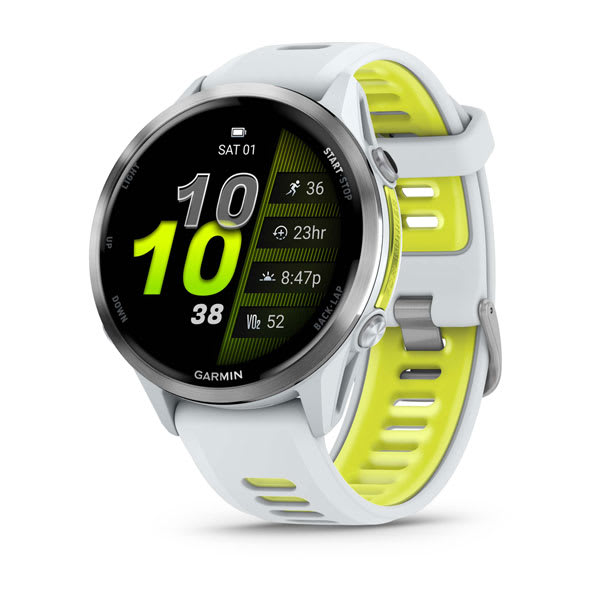
Garmin Forerunner 970
84/100 Crowd 87 Assessment 87 Value 68 €624
The most complete Forerunner: ECG, flashlight, Gen 5 heart-rate sensor and new load tools.
- GPS accuracy9.3
- Battery8.5
- Training suite9.6
- Display9.4
- Value6.6
Pros
- Sapphire lens, brighter AMOLED, LED flashlight, speaker and mic
- Gen 5 optical HR and ECG; near-perfect land GPS in DC Rainmaker's tests
- Running Tolerance, Impact Load and triathlon Garmin Coach for load management
Cons
- Premium price (about €624 street, €749.99 RRP)
- Smartwatch battery down to 15 days (965: 23); Running Economy needs the HRM 600 strap
Buy it if You coach or train for endurance and triathlon and want maps, the full readiness and load suite, and data you can use to manage clients' weekly volume. Skip it if You mainly run and don't need maps or the newest load tools: a discounted 965 or a Forerunner 170 covers most of it for far less.
#12 Best value GPS
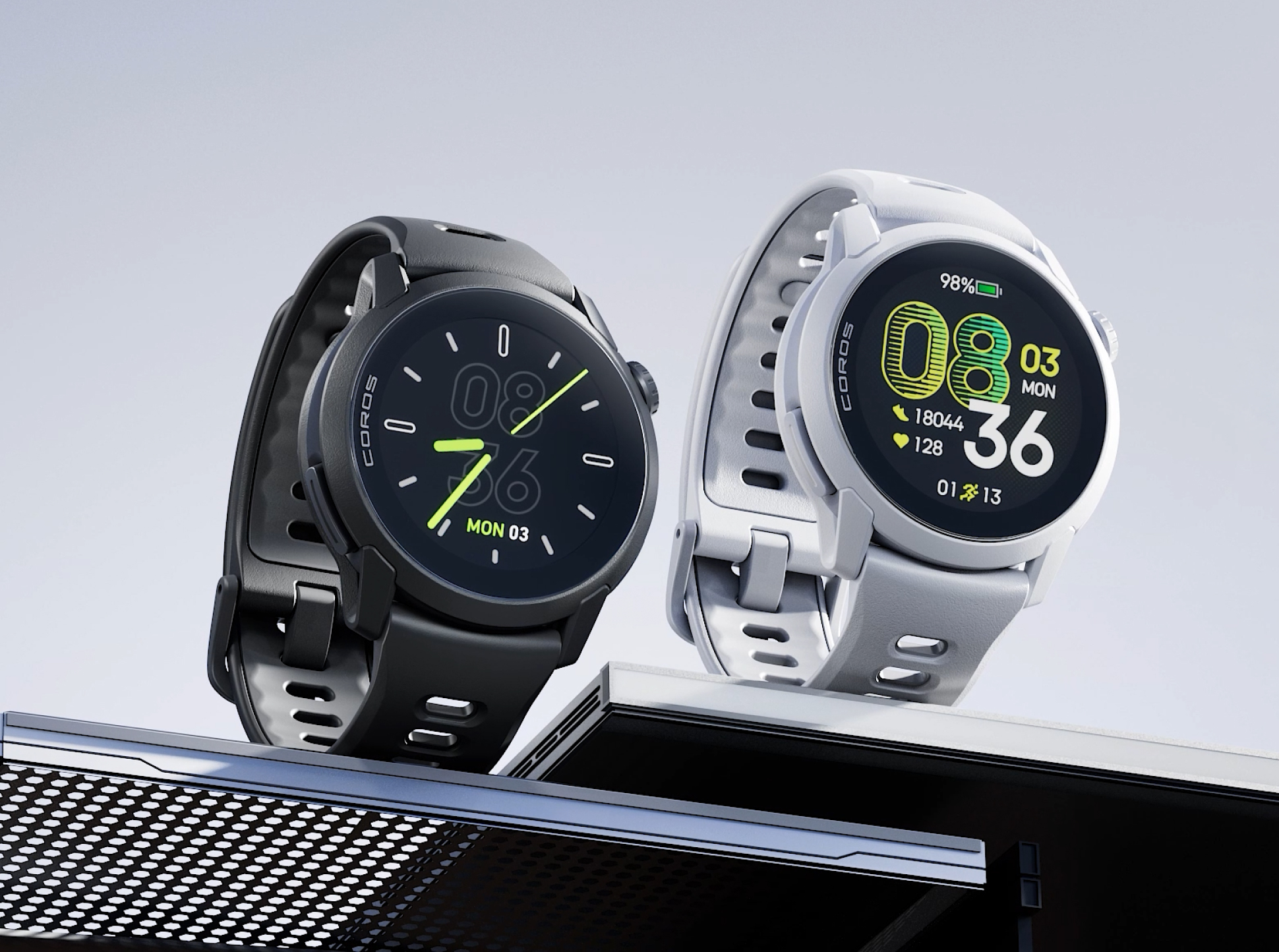
COROS PACE 4
84/100 Crowd 85 Assessment 84 Value 84 €267.50
The PACE formula with an AMOLED screen: ultralight, accurate GPS, up to 19 days of battery.
- Accuracy8.3
- Battery9
- Features8
- App/ecosystem8
- Value8.5
Pros
- Bright 1.2" AMOLED (1,500 nits) in a 32 g package on the nylon band
- Up to 19 days daily use and 41 h GPS, 16 h more GPS than the PACE 3
- Offline maps (beta, Sept 2026 update), microphone for voice notes, action button
Cons
- Pricier than the PACE 3 (about 268 EUR vs about 199 EUR street)
- No NFC payments or music streaming; HR can wobble outside running
Buy it if You coach runners or triathletes and want accurate GPS, a readable AMOLED and two-plus weeks of battery at a mid-range price, without Garmin's markup. Skip it if You want payments, music streaming or a premium metal build, or you're happy with a PACE 3, which does the core training job for less.
#13 Subscription-free smart ring
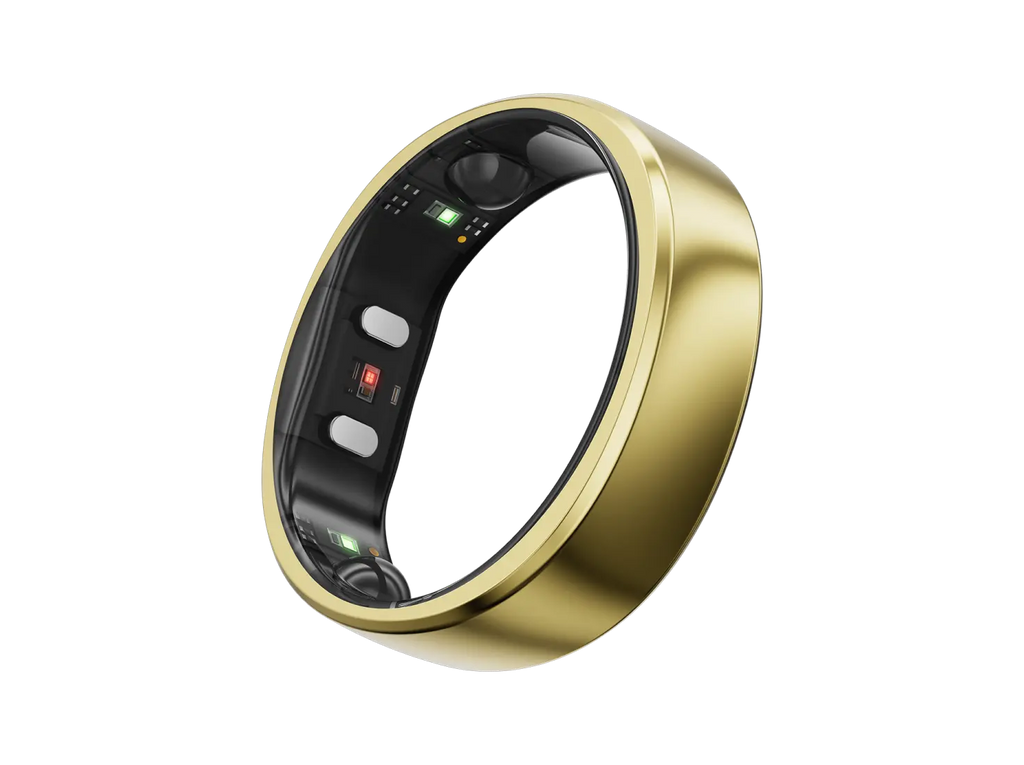
RingConn Gen 2
84/100 Crowd 84 Assessment 84 Value 86 €279
Every metric free forever, 10–12 day battery and a ~150-day charging case — the no-subscription pick.
- Accuracy8
- Battery10
- App/insights6
- Comfort/design9
- Value (no subscription)9
Pros
- Class-leading battery: ~12 days plus ~150-day charging case
- No subscription — all metrics included (Oura charges €5.99/mo)
- Very thin, light titanium design; comfortable all-day/all-night wear
Cons
- App is dense and less refined than Oura/Ultrahuman
- PVD/titanium coating is prone to scratches
Buy it if Buy it if you want Oura-level sleep and recovery tracking without a monthly fee and value the best battery life on the market. Skip it if Skip it if you want deep, polished app insights or serious activity/workout tracking — Oura and Ultrahuman still lead there.
#14 Multisport, dual-band GPS
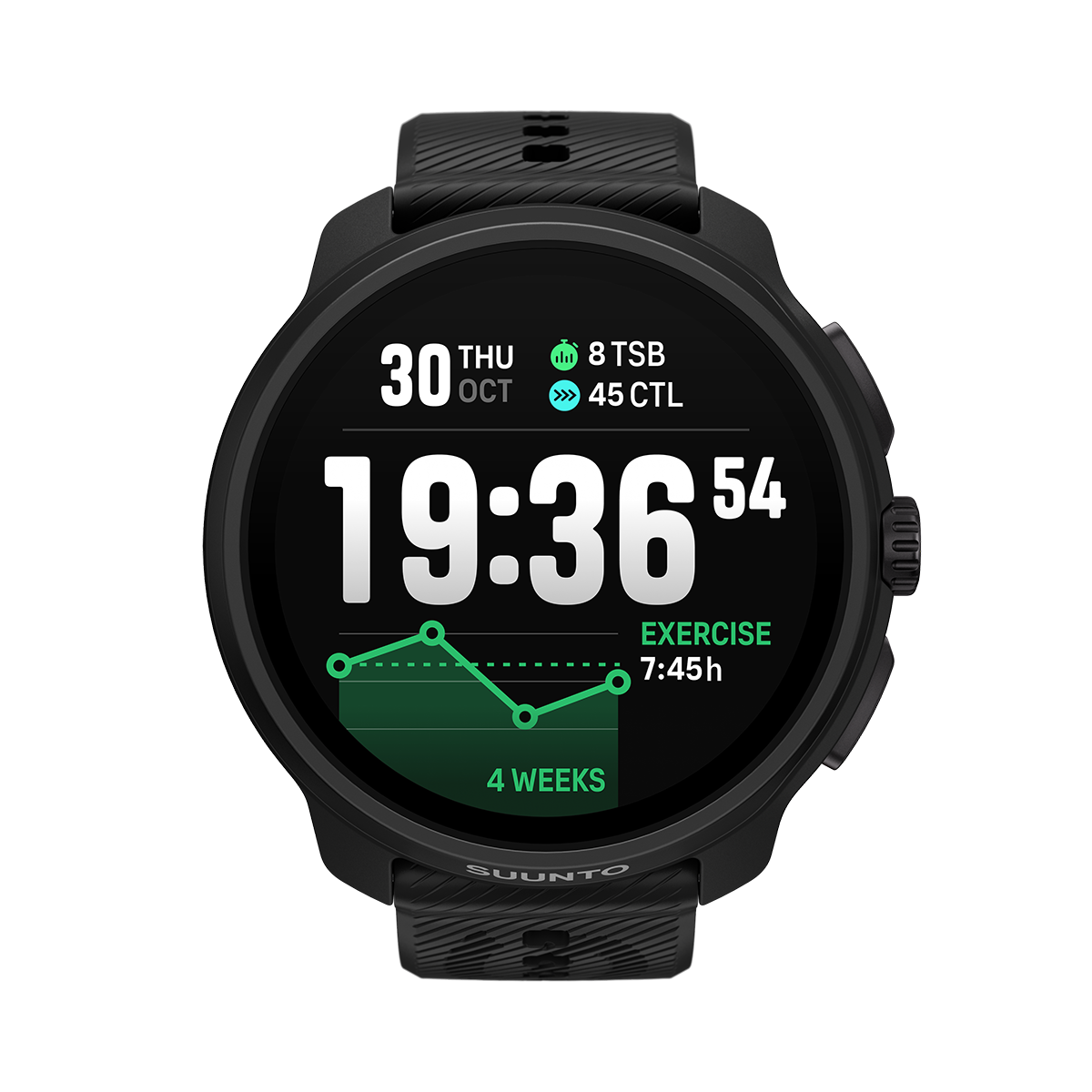
Suunto Race 2
84/100 Crowd 82 Assessment 87 Value 80 €449.10
Dual-band GPS, free offline maps and a huge battery, now with much better wrist heart rate.
- GPS accuracy9
- Battery9.3
- Display9.4
- Training features7.6
- Value8
Pros
- 1.5" LTPO AMOLED at 2,000 nits in a thinner, lighter case
- Up to 55 h dual-band GPS and up to 18 days smartwatch; free offline maps
- Wrist heart rate much improved over the Race, per TechRadar and TOUR
Cons
- Pricier: about €449 street vs about €299 for the original Race
- Basic smart features, no music storage; HR can still slip on some runs
Buy it if You want a big, bright multisport watch with maps, dual-band GPS and multi-day battery for well under a Forerunner 970, with wrist heart rate you can mostly trust. Skip it if You want music or Garmin's ecosystem, or you're price-led: the original Race now does most of this for about 130 EUR less.
#15 Strain & performance

Whoop 4.0
82/100 Crowd 84 Assessment 84 Value 72 €30/mo Subscription: €30/mo membership
The coach's strain-and-recovery band — screenless, built to program by readiness.
- Accuracy8.8
- Value7
- Build8.6
- Experience9
- Coach fit9.2
- Support7.8
Pros
- Best-in-class strain + recovery for athletes
- Screenless — zero distraction, wear anywhere
- Deep coaching dashboards
Cons
- Membership-only; no buy-once option
- No display / on-demand metrics
Buy it if You coach performance and program by daily readiness and strain. Skip it if You want a one-time purchase or an on-wrist display.
#16 Affordable all-rounder

Fitbit Charge 6
82/100 Crowd 82 Assessment 79 Value 90 €89 Subscription: Fitbit Premium €9/mo (optional)
The best-value everyday tracker — accurate sensors and ECG for ~€130.
- Accuracy8.2
- Value8.6
- Build7.6
- Experience8
- Coach fit7
- Battery8.2
Pros
- Accurate health sensors + ECG at a low price
- Built-in GPS and Google Maps / Wallet
- ~7-day battery
Cons
- Best insights locked behind Fitbit Premium
- GPS can be inconsistent; small screen
Buy it if You want an affordable, accurate everyday tracker for yourself or clients. Skip it if You need pro-grade GPS or refuse a subscription for full features.
#17 Current-gen strain band

Whoop 5.0
82/100 Crowd 84 Assessment 84 Value 72 €199/yr Subscription: One €199/yr · Peak €264/yr · Life (MG) €399/yr — hardware included
14-day battery, ECG + BP on the MG tier — the current screenless recovery band.
- Accuracy8.6
- Value7
- Build8.8
- Experience9
- Coach fit9.2
- Support7.6
Pros
- 14+ day battery (was ~4–5) — charges on the wrist
- On-demand ECG + daily blood-pressure insights; Healthspan metrics
- Best-in-class strain & recovery coaching
Cons
- Heart-rate accuracy still isn't elite
- Subscription-only, >€199/yr — no way to buy the hardware outright
Buy it if You train by readiness and want the deepest recovery and strain analytics in a screenless band — now with medical-grade ECG and blood-pressure metrics. Skip it if You want a screen, built-in GPS, or a one-time purchase instead of a membership.
#18 Subscription-free ring

Ultrahuman Ring AIR
82/100 Crowd 80 Assessment 82 Value 86 €234.53
Oura-class recovery accuracy with no subscription, plus an optional metabolic angle.
- Accuracy8.4
- Battery7.5
- Comfort9
- App7.5
- Value8.6
Pros
- Subscription-free — one-time purchase unlocks all data (vs Oura’s paywall)
- Excellent, accurate sleep and recovery tracking
- Very light (2.4–3.6 g), comfortable all-day and all-night wear
Cons
- Weaker automatic workout tracking than a wrist wearable
- App polish and ecosystem are younger than Oura’s
Buy it if You want continuous sleep, recovery and HRV data — with an optional metabolic angle — without locking clients into a monthly subscription. Skip it if You need precise gym/strength workout tracking or the most refined app experience.
#19 Subscription-free smart ring

RingConn Gen 3
82/100 Crowd 83 Assessment 83 Value 79 €369
Still no subscription, now up to 14 days per charge and a universal charging case.
- Accuracy8
- Battery10
- App/insights6.5
- Comfort/design8.7
- Value (no subscription)8.5
Pros
- Up to 14 days per charge plus a universal wireless charging case
- No subscription: every metric included
- New vibration alerts and vascular trend insights; sleep apnea monitoring kept
Cons
- Exercise heart rate still misses peaks; blood pressure is an estimate, not a measurement
- Thicker (2.3 mm) and dearer than the Gen 2; app less polished than Oura's
Buy it if You want Oura-level sleep and recovery data for yourself or clients without a monthly fee, and battery life matters more to you than workout tracking. Skip it if You already own a Gen 2 (the upgrade is modest) or need accurate exercise heart rate: use a chest strap or a watch for training.
#20 Hybrid health watch

Withings ScanWatch 2
81/100 Crowd 82 Assessment 81 Value 78 €275.13
ECG, SpO2 and ~30-day battery in a classic-looking hybrid — health-first, no GPS.
- Health suite8.8
- Battery9
- Design9
- Smart features6
- Value7.6
Pros
- Standout hybrid analog design that reads as a real watch
- Deep, clinically-oriented health suite — ECG/AFib, SpO2, temperature
- Class-leading ~30-day battery life
Cons
- No built-in GPS (connected GPS via phone only)
- Limited smart features — tiny OLED, no third-party apps
Buy it if You have health-focused clients who want discreet, long-battery cardiovascular and sleep monitoring in a classic-looking watch. Skip it if You need on-wrist GPS, live workout metrics or full smartwatch apps — a Garmin or Apple Watch fits better.
#21 Multisport sensors
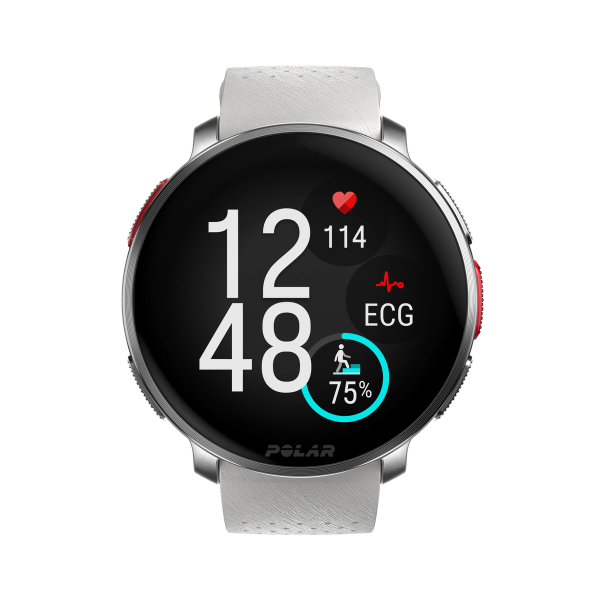
Polar Vantage V3
78/100 Crowd 83 Assessment 76 Value 70 €390.59
Deep sensor suite (ECG, SpO2) and week-long battery for data-hungry endurance athletes.
- Accuracy8
- Battery9
- Sensors9
- App/ecosystem6
- Value6
Pros
- Excellent battery life (up to ~8 days, long GPS runtime)
- Comprehensive sensors: dual-frequency GPS, ECG, SpO2, skin temperature
- Bright AMOLED display with onboard offline maps
Cons
- Expensive at full RRP
- Smartwatch/app ecosystem feels barebones (no contactless pay, limited music/apps)
Buy it if Serious triathletes and multisport/endurance athletes who want deep training and recovery data plus long battery life. Skip it if People who want a full smartwatch (contactless pay, apps, music) or a budget-friendly tracker.