

Garmin Forerunner 970 vs Ultrahuman Ring AIR
Our pick: Garmin Forerunner 970 takes it — 84 vs 82.
Both are strong — the call comes down to what you prioritise:
- Garmin Forerunner 970 — You coach or train for endurance and triathlon and want maps, the full readiness and load suite, and data you can use to manage clients' weekly volume.
- Ultrahuman Ring AIR — You want continuous sleep, recovery and HRV data — with an optional metabolic angle — without locking clients into a monthly subscription.
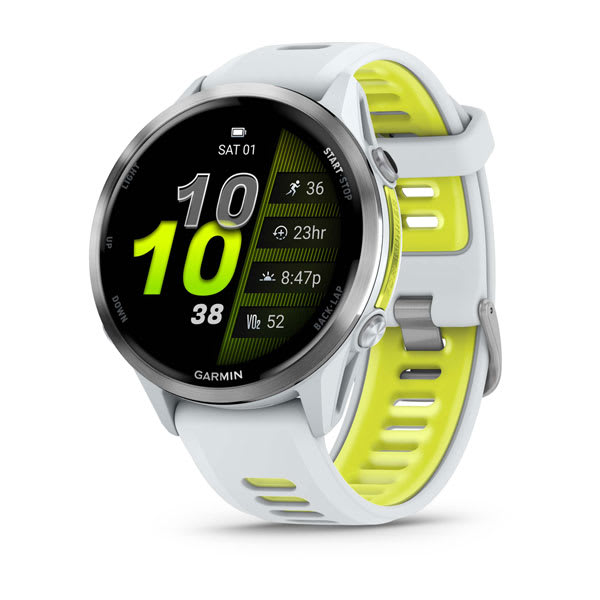
Garmin Forerunner 970
The most complete Forerunner yet: a brighter AMOLED under sapphire, a flashlight, speaker and mic, ECG, a Gen 5 heart-rate sensor and new load tools such as Running Tolerance. It also costs about 135 EUR more than the 965 we reviewed, and smartwatch battery drops from 23 to 15 days.

Ultrahuman Ring AIR
An accurate, feather-light recovery ring with a standout metabolic-health angle — and, unlike Oura, no subscription. Softer workout tracking is the trade.
Compare side-by-side
| Garmin Forerunner 97084Scorefrom€624Review → | Ultrahuman Ring AIR82Scorefrom€234.53Review → | |
|---|---|---|
| Form factor | — | — |
| Battery life | — | — |
| Screen | — | — |
| Sleep tracking | — | — |
| Recovery / HRV | — | — |
| Subscription | — | — |
| Water resistance | — | — |
Prices are our researched reference points.
Affiliate disclosure. We may earn a commission from links on this page. It never affects the Sqwod Score — scores are set by the methodology, not commission.